Avilume XT50 Pro and XR50 in-depth review: Are these the best binoculars for birding and wildlife?
Featuring:
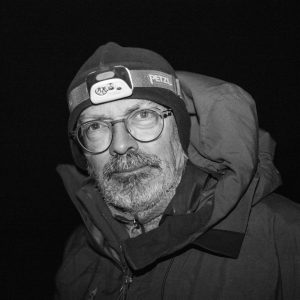
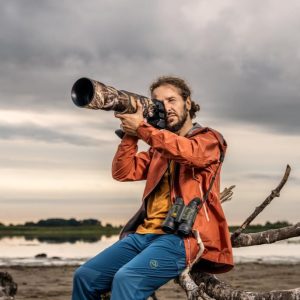
Magnus Winbjörk, Bart Vercruysse, Boris Belchev
Estimated read time: 9 min.
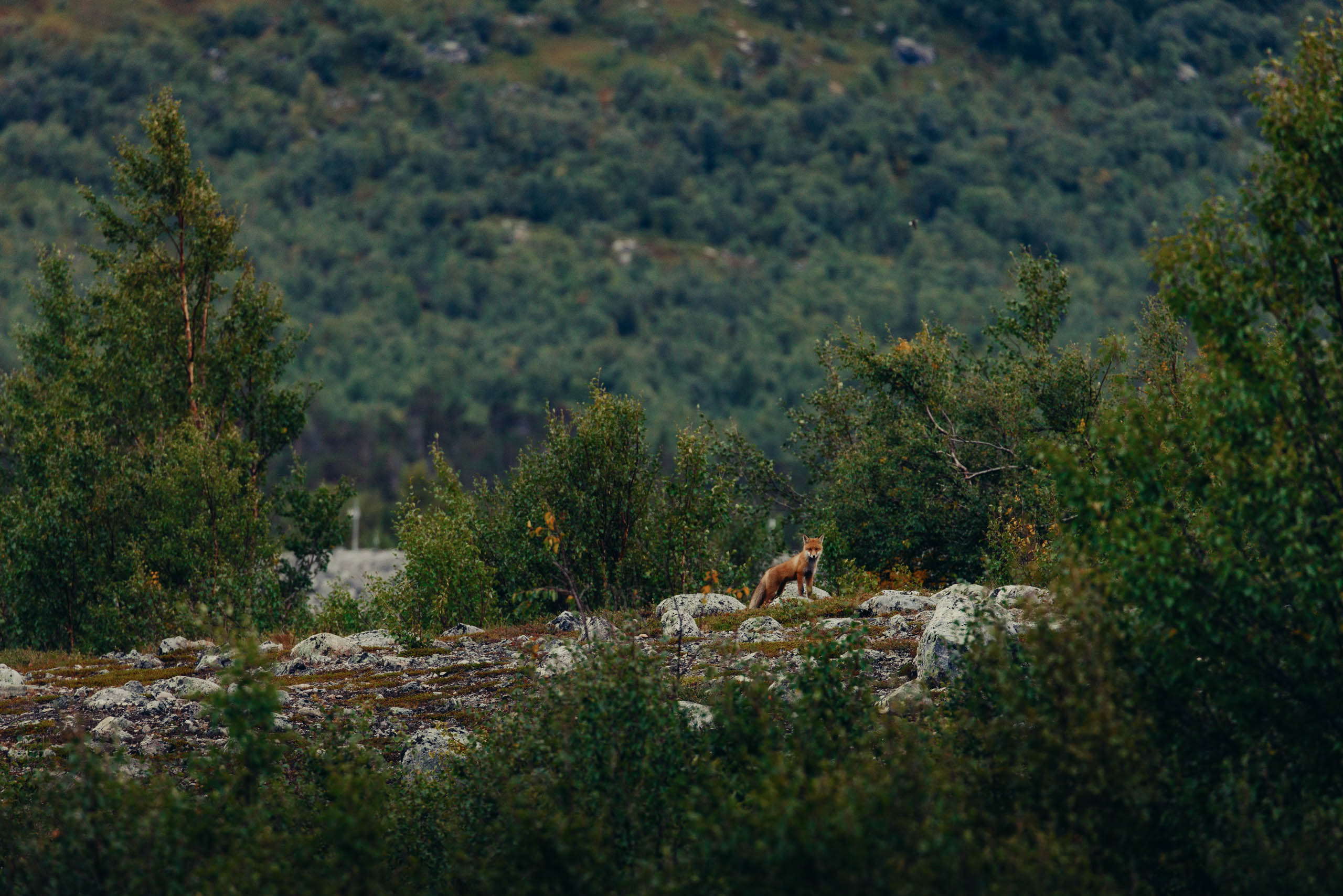
Wildlife doesn’t give much away. A woodcock disappears into bracken before you’ve registered it landed. A red fox becomes part of the autumn grass without so much as a goodbye. And the species worth staying up for tend to wait until the last of the light is gone. Avilume was built for exactly these moments — when you want answers to who’s chirping in the trees or moving through the grass.
While the two models, Avilume XT50 Pro and Avilume XR50, share plenty of features under the hood, their thermal capabilities take different approaches to the landscape. And as in nature, the differences are in the details.
Key takeaways
Thermal and 4K digital channels support the complete observation workflow — locate, identify, and document.
Avilume XT50 Pro pairs a premium 1280 × 1024 thermal sensor with a wide 17.5° field of view for fast, efficient scanning across forests and mixed terrain.
Avilume XR50 offers 4–32× thermal magnification, <18 mK system NETD for higher sensitivity, and longer runtime for distant observation.
Picture-in-picture (PiP) mode keeps thermal and digital information in view at the same time.
Electronic image stabilization keeps the view steady at high zoom, so identifying what you’re looking at doesn’t turn into a guessing game.
A built-in 1,500 m laser rangefinder, 64 GB storage, sound recording and Wild Vision app support reduce the need for separate devices.
Quick overview of Avilume binoculars
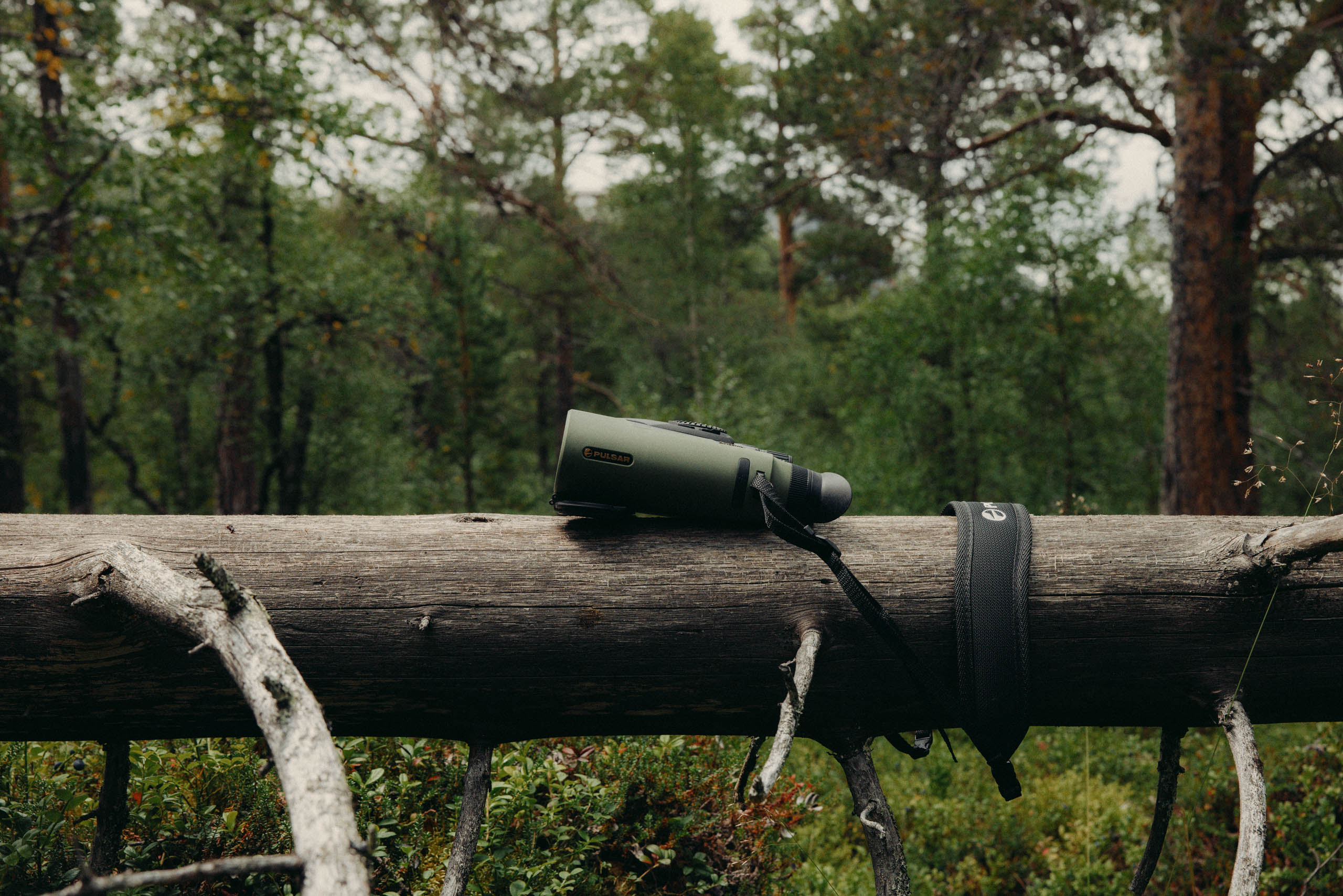
Avilume is a family of multispectral binoculars that brings thermal, full-color digital, and night vision together in one device. Built for birdwatchers, wildlife observers, photographers, and field professionals who want to see more than daylight allows and stay out longer doing it.
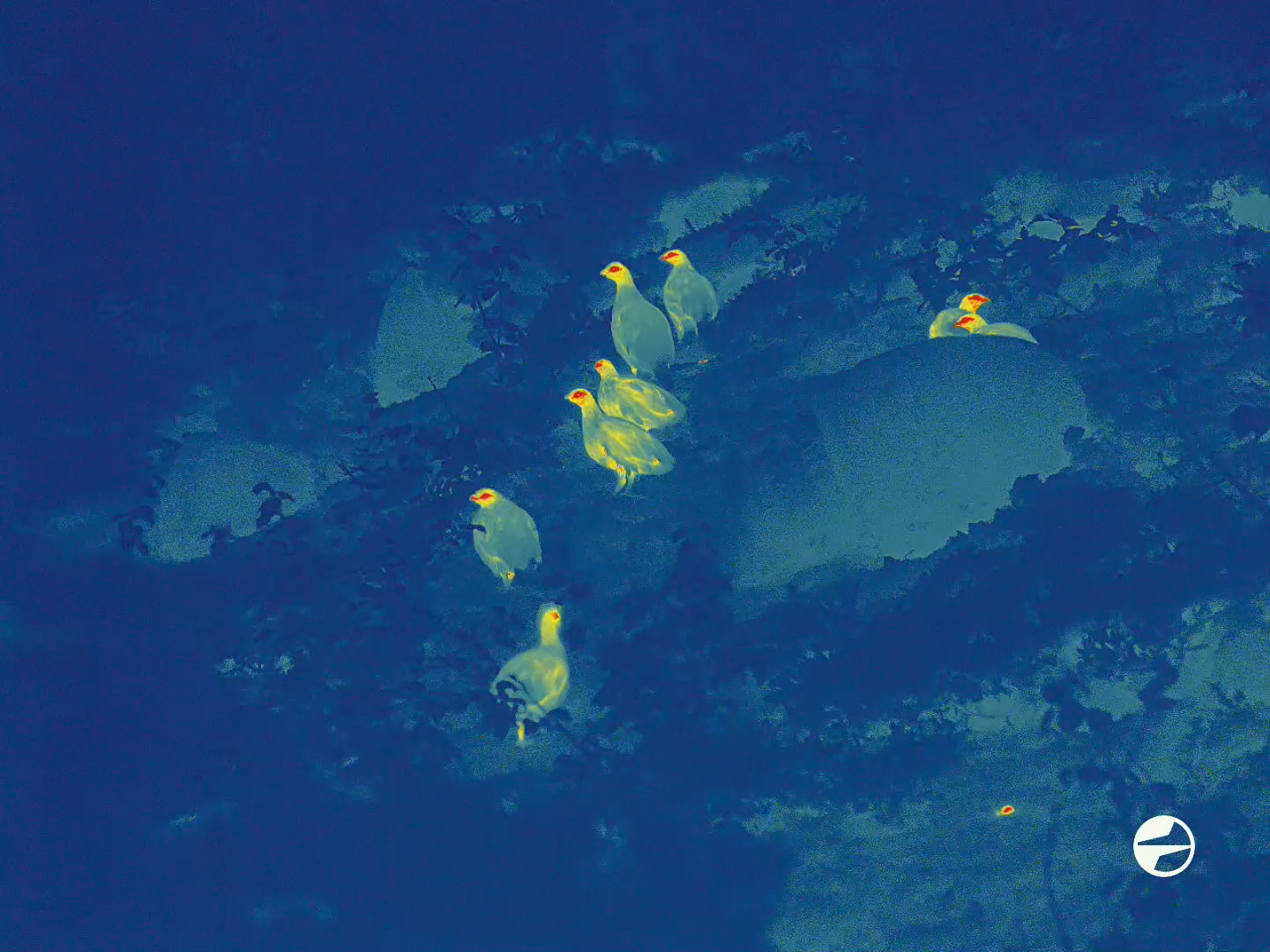
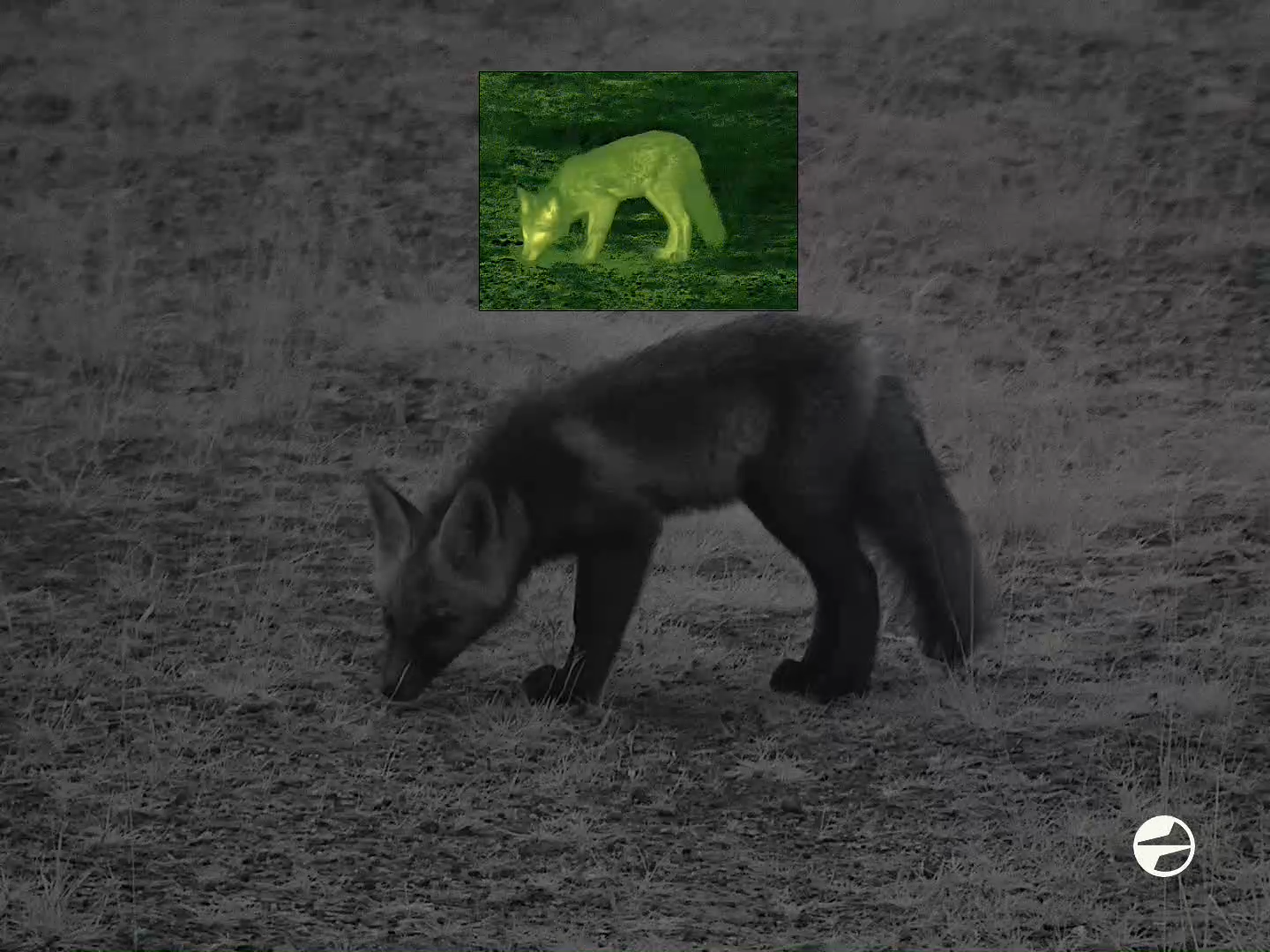
Simply put, Avilume features two channels: thermal and digital. Every living creature radiates heat, and the thermal channel is able to pick up those heat signatures through darkness, bad weather, and camouflage. The 4K digital channel, on the other hand, steps in after you detect a bird or animal. It features a daytime imaging mode for those visible details, like color and plumage, and night vision mode that works together with an IR illuminator to help you navigate after the lights go out.
Between them, the XT50 Pro and XR50 answer every question the field tends to ask:
Thermal answers “where is it?”
Digital imaging answers “what is it?”
The laser rangefinder answers “how far is it?”
The recorder preserves the sighting for a closer look later
And both models share the classic binocular design, perfect for two-eye observations, and perform from day into twilight and through full night. The difference comes down to what you’re prioritizing in the field.
Avilume XT50 Pro is the wide-view scanner — built for covering ground and soaking up thermal detail.
Avilume XR50 trades width for reach with a more sensitive sensor, longer range, and more battery life for the sessions that go long.
Boris Belchev, one of the first professional wildlife observers to test Avilume in the field, sums it up well.
What impresses me most is the combination of day vision, thermal imaging, and IR night vision in one binocular. The day channel gives me the natural colors, detail, and identification cues I need. The thermal channel is invaluable for detecting the heat signature of animals that are hidden in vegetation, darkness, or difficult backgrounds — often revealing wildlife that I simply would not notice with conventional optics.
Benefits and considerations
Benefits
Considerations
Thermal detection and 4K digital identification in one device
The device weighs around 1 kg, which can feel straining for longer sessions.
24/7 use across daylight, twilight and darkness
While the device features a 4K sensor, the captured video and photos are only 1444 x 1080
XT50 Pro offers a 17.5° wide thermal field of view
Combined thermal/digital Picture-in-Picture
Electronic image stabilisation at higher zoom
Photo and video recording with sound and 64 GB memory
1,500 m integrated laser rangefinder
Quick-change APS5 batteries and energy-saving Sleep mode
Wild Vision streaming, remote control and file transfer
Full technical specifications: Avilume XT50 Pro and XR50
Parameter
XT50 Pro
XR50
Thermal imaging sensor
1280 × 1024 / 12 µm
640 × 480 / 12 µm
System NETD
<20 mK
<18 mK
Thermal magnification
2–24×
4–32×
Horizontal field of view
17.5°
8.8°
Digital sensor
3840 × 2160 CMOS
3840 × 2160 CMOS
Digital magnification
6.5–26×
6.5–26×
Laser rangefinder
Up to 1,500 m
Up to 1,500 m
Recording
1440 × 1080 photo/video with sound
1440 × 1080 photo/video with sound
Internal memory
64 GB
64 GB
Maximum operating time
Up to 8 h on 2 × APS5
Up to 10 h on 2 × APS5
IR illuminator
Focusable 850 nm / 3 levels
Focusable 850 nm / 3 levels
Display / detection range / weight / IP rating
MicroLED AMOLED 1920 x 1080 / thermal 2,300 m / 1 kg / IP67
MicroLED AMOLED 1920 x 1080 / thermal 2,300 m / 1 kg / IP67
In-depth review of features and benefits
Multispectral imaging: find, identify, and document
Avilume brings thermal and digital channels together in one device, and each mode earns its keep in the observation workflow:
Thermal — picks out warm shapes against cooler surroundings, making it the natural first tool for spotting birds on branches or animals on the move in any light.
Digital full-color — once you’ve found something, the 4K channel fills in the color, shape, and detail needed to work out exactly what it is.
Night vision — when the light goes, night vision keeps the view clear, especially when paired with the built-in IR illuminator for total darkness.
Together, they give you a complete observation workflow in a single device. Sighting windows can be brief — barely enough time to react, let alone reach for a second piece of kit. With Avilume, you switch between modes, not between devices.
Magnus Winbjörk, a wildlife photographer, explains how Avilume’s thermal detection cuts through even the trickiest observation conditions:
When the weather is cloudy, I often use thermal to search for birds. It’s so sensitive that you can sometimes even see bird droppings on the ground because they are still slightly warmer than the surroundings.
Picture-in-picture: thermal and digital context together
Both Avilume models feature Picture-in-Picture (PiP) mode, letting you display thermal and digital images at the same time, in the same view. It’s a simple way to combine thermal detection across the wider landscape with the digital channel’s identification detail — no need to keep switching between full-screen channels.
For birdwatchers, that shortens the time between spotting a bird on a branch and identifying it before it flies off. It also makes it easier to keep track of a moving subject in the field, whichever context — thermal or detailed — you need in the moment.
XT50 Pro HD thermal imaging and wide field of view
A premium European 1280 × 1024 / 12 µm sensor sits behind Avilume XT50 Pro’s thermal image. The real payoff of that higher resolution shows up when an animal is close — more detail, clearer shapes, less guessing. Pair that with a 17.5° field of view and forests and mixed terrain start feeling a lot more manageable.
Boris Belchev describes how versatile the XT50 Pro proves across different landscapes:
Some of the situations where the Avilume has proved particularly valuable have been tracking nocturnal wildlife in the complete darkness of forests, finding Shorelarks and Snow Buntings in snowy landscapes, and locating European Bison and Arctic Foxes against difficult backgrounds.
XR50 thermal sensitivity and long-range performance
Avilume XR50 plays a different game. Its 640 × 480 sensor with a system noise-equivalent temperature difference (NETD) of <18 mK produces a cleaner, higher-contrast image even when the temperature difference between an animal and its surroundings is barely there.
Magnification goes from 4× to 32×, and the narrower 8.8° field of view means you see less of the landscape, but reach much further into it, across lakes, riverbanks, and mountain terrain where subjects like to keep their distance. For species that startle easily, that extra reach isn’t just useful — it’s the whole point.
4K digital full-color imaging
Both models share the same 3840 × 2160 CMOS digital sensor — rich color by day, high contrast after dark, and four viewing modes — Daylight, Twilight, Black & White, and Green — to keep up with whatever the conditions throw at you. Digital magnification runs from 6.5× to 26×. One thing worth knowing: the sensor is 4K, but photos and videos are saved at 1440 × 1080 resolution.
Electronic image stabilization
The higher the zoom, the more small hand tremors show up in the image. Avilume’s electronic image stabilization works quietly in the background to offset this, keeping the view steady during handheld observation. Tracking a fast-moving bird, panning across open terrain, comparing markings at high zoom — these are the moments where a steadier image stops being a nice-to-have and becomes the whole point.
24/7 observation and focusable IR illumination
Best part about Avilume: it doesn’t really have off-hours. Full-color digital by day for confident identification, night vision with an 850 nm infrared illuminator after dark for when the light runs out. Thermal imaging is available at any hour to pick out animals and birds no matter what the conditions are doing. Morning, midday, twilight, or complete darkness — there’s always a channel for it.
Laser rangefinder: add distance to the observation record
Tucked between the two optical channels is a laser rangefinder, measuring distances of up to 1,500 m, with true horizontal distance indication. For wildlife watching, that distance reading is more useful than it might sound — it tells you whether you’re close enough to observe comfortably, or whether moving in would risk spooking whatever you’re watching. Sometimes the most considerate thing you can do is stay exactly where you are.
Recording, storage, and Wild Vision app
Spotted something worth keeping? Avilume records video with sound and captures photos at 1440 × 1080 resolution in MP4 and JPEG format. With 64 GB of internal storage, there’s enough room to document a full day in the field without having to delete anything to make space. The Wild Vision app handles the rest — remote control, file viewing and downloads, 16 GB of cloud backup, and firmware updates, all from your phone.
Interface, controls, and binoculars handling
Avilume handles like a classic pair of binoculars — two eyepieces, intuitive, with glove-friendly controls and a tactile three-position switch for On, Sleep, and Off. Sleep mode saves power and gets you back to observation faster than a full restart. Two things to know going in: it’s on the heavier side, and with several imaging channels on board, a quick run-through at home before heading out is time well spent.
Battery life and field use
Both Avilume models come with two quick-change APS5 batteries — a detail that makes swapping straightforward when you’re deep in the field. Under typical use, the XT50 Pro will see you through around 8 hours, while the XR50 can stretch to 10. That said, a few things will quietly work through the battery faster than others:
IR illuminator
Recording
Brightness of the display
Streaming
Cold temperatures
Laser rangefinder
Put the binoculars in Sleep or Off mode when you’re not watching. It’s a small habit with a bigger payoff than you’d expect.
Expert insights and field tests
In the past, sunset meant it was the end of your wildlife observation day. You had a good reason to return home. Sorry, but with thermal devices and certainly with the possibilities offered by multispectral devices like Avilume, there is no excuse anymore for not staying in the field at night!
— Bart Vercruysse, nature photographer.
This is where the two latest devices from Pulsar Wildlife become especially interesting, because they expand what you can do even further. Until now, I have mainly relied on thermal imaging, which means detecting animals through their body heat. But these new units are multispectral, so you can also use other ways of seeing.
— Magnus Winbjörk, wildlife photographer.
After using it across such different habitats and conditions, I see the Avilume LRF DXT50 as much more than a thermal device. It has become a genuinely versatile observation tool that I can rely on throughout my wildlife tours — from bright Mediterranean landscapes to the challenging light of Iceland and Lithuania.
— Boris Belchev, wildlife photographer and guide.
Avilume XT50 Pro vs XR50
Decision factor
XT50 Pro
XR50
Best suited for
Wide-area scanning and maximum thermal detail
Longer-distance observation and higher thermal magnification
Best terrain
Forest and mixed terrain
Open areas, lakes, riverbanks, plains and mountains
Choose this model if…
You want premium quality thermal detail and the widest view for fast, confident scanning.
You want more reach, more sensitivity, and keep respectful distance from species that startle easily.
Unboxing and setup
The entire contents of the box can be broken down into a list:
Avilume multispectral binoculars
APS 5 rechargeable battery (2 pcs.)
APS 5 battery caps (2 pcs.)
APS 5 charger
Power adapter
USB Type-C cable with Type-A adapter
Carrying case for binoculars
Binoculars harness
Neck strap
Optics cleaning cloth
Quick start guide
Warranty card
Tripod adapter
Before using your Avilume binoculars, connect them to the Wild Vision app and check for any firmware updates. If a newer version is available, install it.
Final thoughts: is Avilume right for you?
Is Avilume right for you? Short answer: it depends. Longer answer: if you’re a photographer, birdwatcher or wildlife observer who’s tired of calling it a day when the light does, it probably is. The real selling point isn’t any one spec — it’s having thermal detection, full-color identification, and documentation all in the same device, without ever reaching for something else.
If you do choose Avilume, the two models approach that workflow differently:
Choose the XT50 Pro if you want wide thermal coverage, premium detail, and the upper hand in forests and mixed terrain.
Choose the XR50 if your subjects tend to be far off, across open water or plains, and you need the reach and battery life to match.
Choose either model if dawn, dusk, and night are when you observe the most, and documentation across thermal, color, and night vision matters.
Stick to conventional binoculars if your watching is purely daytime and passive, and the idea of charging a pair of binoculars doesn’t appeal.
Avilume is built to find what conventional optics miss and keep it when the moment arrives, but it’s an advanced piece of kit that might be too much for some.
FAQs
What are Avilume multispectral binoculars?
Avilume XT50 Pro and XR50 are electronic binoculars that combine thermal imaging, a 4K digital channel, night observation, image stabilization, recording, and a laser rangefinder. They are purpose-built for locating, identifying, and documenting birds and wildlife across changing light and terrain.
What is the difference between Avilume XT50 Pro and XR50
Avilume XT50 Pro uses a premium 1280 × 1024 thermal sensor and a wide 17.5° field of view, making it the stronger choice for fast scanning and detailed thermal viewing. Avilume XR50 uses higher 4–32× thermal magnification, <18 mK system NETD, and offers up to ten hours of runtime for longer-distance observation
Can thermal binoculars help with birdwatching?
Yes, thermal imaging can help reveal a bird’s heat signature in darkness, low contrast, or partial cover, making it easier to locate the subject. Thermal should be treated primarily as a detection tool; species identification usually depends on the digital view, visible markings, shape, behavior, habitat, and sound.
Can Avilume identify a bird species using thermal imaging?
Thermal imaging alone will not reliably identify every species. It is used to locate or pre-identify a warm subject. Avilume’s 4K digital channel then provides color and visible detail that can support a more confident identification when viewing conditions and distance allow.
Can Avilume be used during the day and at night?
Yes, the digital channel supports daylight colour, a dedicated twilight mode, and high-contrast night modes. In complete darkness, the built-in focusable 850 nm IR illuminator supports digital viewing, while the thermal channel detects heat independently of visible ambient light.
Does Avilume record photos and videos?
Yes, both Avilume models capture photos and video with sound at 1440 × 1080 resolution in JPEG and MP4 formats. The binoculars include 64 GB of internal storage, and files can be viewed or downloaded through the Wild Vision mobile app.
How long do Avilume batteries last?
Avilume XT50 Pro provides up to eight hours of operation with two APS5 batteries, while Avilume XR50 provides up to ten hours. Actual runtime depends on temperature, display brightness, recording, wireless connectivity, IR illumination, and other active features.
Does Avilume include a laser rangefinder?
Yes, both Avilume models include a built-in laser rangefinder with a measurement range of up to 1,500 m. It supports single measurements and continuous scanning, with readings in meters or yards and true horizontal distance indication.
Which Avilume model is better for forest observation?
Avilume XT50 Pro is the better fit for forest and mixed terrain because its 17.5° thermal field of view covers 30.7 m at 100 m. This wider view helps users search a larger area quickly when the location of a bird or animal is unknown.
Which Avilume model is better for long-distance wildlife observation?
Avilume XR50 is designed for greater reach. Its thermal magnification ranges from 4× to 32×, and its narrower 8.8° field of view is suited to distant observation across open terrain, water, plains, or mountains, including species that the observer does not want to approach closely.
Can Avilume replace conventional optical binoculars?
For users who value thermal detection, night viewing, stabilization, and recording, Avilume can become the primary all-in-one observation device. However, the electronic viewing experience, battery dependence, size, weight, and price differ from conventional optics, so the best choice depends on the observer’s priorities.
About the experts
Expert Contributor:
Magnus Winbjörk
Magnus Winbjörk is a Swedish nature photographer and photography tour guide based in Tjautjas, in Norrbotten, in Sweden’s far north. Working in the region’s remote wilderness, he uses thermal imaging to locate wildlife in the dark and across vast, open terrain, and leads photography tours sharing that landscape and its animals with others.
Expert Contributor:
Bart Vercruysse
Bart Vercruysse is an independent Belgian nature photographer specializing in nocturnal seabird photography. Since discovering the nighttime activity of Cory’s Shearwaters on Pico in 2012, he has pursued “Petrels by Night” — a project to photograph Western Palearctic petrels, storm petrels, and shearwaters in flight at their colonies after dark, working entirely in infrared since 2018 to avoid disturbing the birds.
Expert Contributor:
Boris Belchev
Boris Belchev is a Bulgarian-born wildlife photographer and nature guide based in Lithuania, working across Europe. He is the founder of Alcedo Wildlife Photography and co-founder of 4Eagles Wildlife Photography Hides. He runs guided tours, hide photography, and nature education projects in the wilderness of the Nemunas Delta and beyond.
Unlock the world of thermal observation with Pulsar Wildlife
Get expert insights, product updates, and tips on using thermal tech for nature exploration.