Avilume vs. Ventex: which wildlife binoculars to choose?
Featuring:
Magnus Winbjork, Bart Vercruysse
Estimated read time: 9 min.
Avilume and Ventex are both excellent choices for nature lovers who want to spot wildlife and go birdwatching. But which one is right for you?
Both families share a familiar binocular shape and thermal imaging at their core, but each takes a different approach to what happens next. Avilume is multispectral — meaning it combines thermal, full-color digital, and night-vision channels in a single device, so you can detect, identify, and record wildlife around the clock without switching gear.
Ventex is thermal-only, built to complement your existing daytime optics by adding the ability to pick out heat signatures — animals and other hot objects — through foliage, fog, and rain where regular binoculars fall short.
Either way, both devices excel within their respective niches, but differences in image channels, field usability, recording capabilities beyond thermal, battery life, and other details mean each is better suited to a different kind of activity. The right choice ultimately comes down to what you need from your device.
Quick overview of Avilume and Ventex
Both product lines share a familiar binocular-style design, but under the hood, their capabilities diverge significantly.
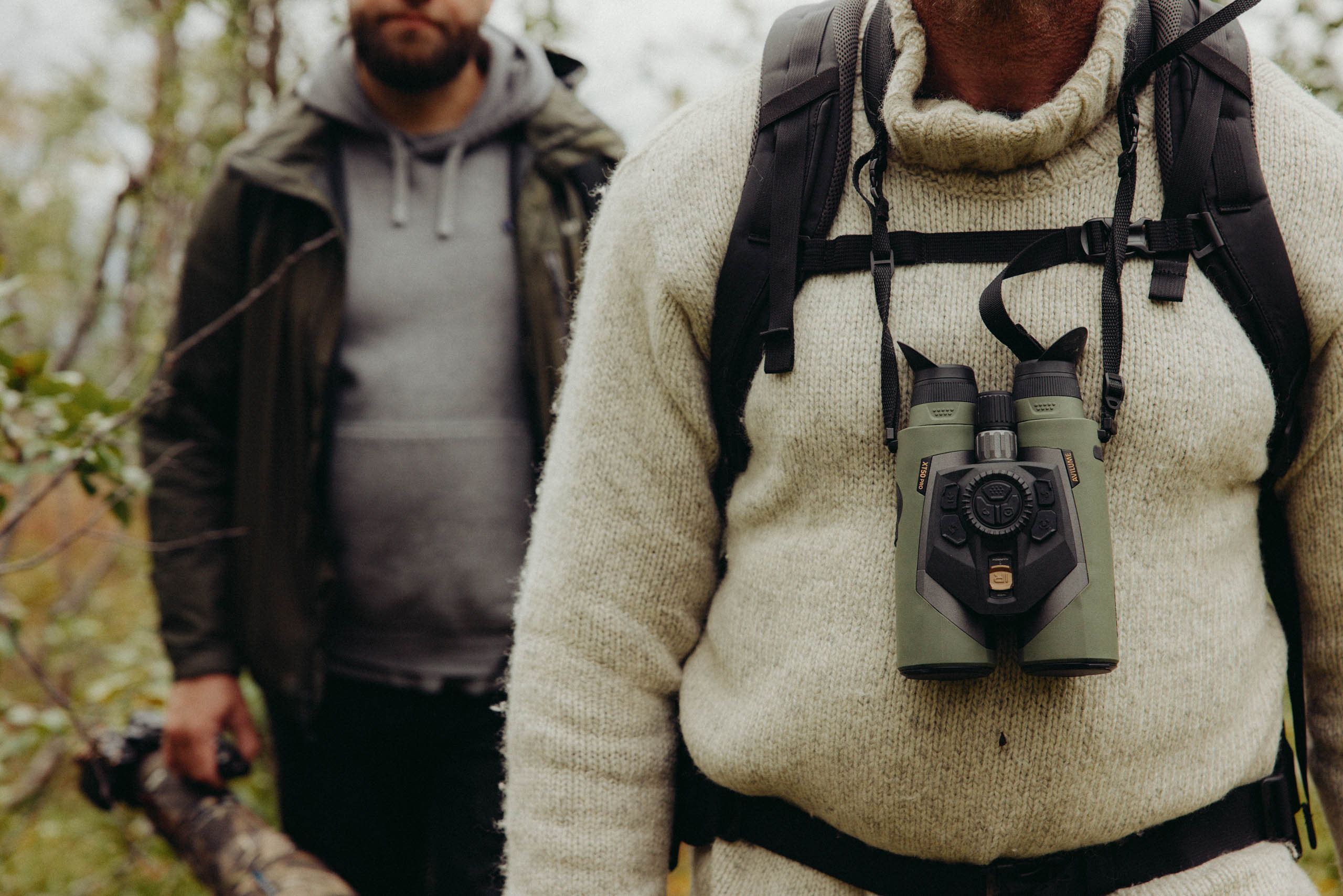
Avilume packs thermal detection, digital identification, and night vision into a single device — no juggling separate optics for every condition. The two models share that foundation but tackle observation differently. The XT50 Pro keeps things wide, holding both the animal and the landscape in view at once, making it the natural choice for scanning and tracking. The XR50 trades that width for higher magnification, built for those moments when the subject is small, far off, and not getting any closer.
Ventex keeps things simple: thermal-only imaging, done well. The XT50 brings a high-resolution sensor for sharp thermal detail, while the XP35 trades some of that resolution for stronger heat detection in tougher weather — useful when fog, humidity, or morning mist start reducing contrast. Both are excellent at the one job they’re built for. Just remember: when the details matter, pack your traditional binoculars too.
Category
Avilume
Ventex
Who it’s for
Birdwatchers and wildlife observers wanting an all-in-one day-to-night system
Observers who prioritize thermal detection or already carry optical identification gear
Main capability
Thermal + 4K digital day + digital night vision
Dedicated thermal imaging
Best reason to choose
Locate, visually examine, and document with one device
Focused, efficient thermal observation
Considerations
More functions to learn; digital identification still depends on conditions
No visible-color channel; separate optics may be needed for species confirmation
You want a single device that combines thermal imaging, full-color digital observation, twilight performance, and nighttime viewing in one.
Species identification matters as much as detection, and you need to see visual details such as plumage, markings, color patterns, and antler shape.
You want to record thermal and digital images and video during observations.
You want to carry one device instead of separate thermal imagers, binoculars, and recording equipment.
Magnus Winbjörk, wildlife photographer and photo tour guide, shares his first experience with Avilume XT50 Pro:
Everything from the design of the box, the colors, text, layout, etc., to the way everything is arranged inside feels incredibly premium and exclusive, but without making the product feel boring or overly formal.
Choose Ventex if:
Your primary goal is locating, tracking, and monitoring animal movements through heat signatures.
You already own optical binoculars, spotting scopes, or cameras for detailed species identification.
You prefer a dedicated thermal-only view, without switching between viewing channels.
Most of your observation takes place at night, in dense vegetation, or in unfavorable conditions, like rain or fog.
What is Avilume?
Avilume, a series of multispectral binoculars, is built to give you clear vision day and night. Its thermal sensor detects heat signatures the naked eye can’t catch, even through foliage. Paired with full-color and night-vision digital channels, Avilume keeps you spotting wildlife clearly around the clock, helping you identify animals wherever they’re hiding.
Both Avilume models share thesame powerful digital sensor — the same full-color clarity by day, the same night vision after dark. Where they part ways is thermal technology:
Avilume XT50 Pro — 1280 × 1024 thermal sensor, 17.5° field of view, 2–24× thermal magnification. Built for sweeping scans across open terrain.
Avilume XR50 — 640 × 480 thermal sensor, 8.8° field of view, 4–32× thermal magnification. Built for long-range observations.
Both models support picture-in-picture viewing, showing thermal and digital images side by side so you can study detail without losing sight of the subject. Image stabilization keeps the view steady in your hands, and a built-in laser rangefinder tells you exactly how far away your subject is — useful for understanding the scale of what you’re watching and where it sits in the landscape. They also feature photo capture, video recording with audio, and connect to the Wild Vision app for streamlined field documentation.
Avilume’s features are particularly valuable when:
Detecting wildlife with thermal imaging, then switching to the digital channel to examine details like plumage, coat markings, shape, or behavior.
Capturing both thermal and visible-color photos and video from the same observation.
Observing across diverse habitats — forests, wetlands, riverbanks, open plains, and mountainous terrain.
Replacing traditional optical binoculars altogether, with a single multispectral device covering day-to-night birdwatching and wildlife observation.
Furthermore, Magnus Winbjörk shares the feeling of using Avilume XT50 Pro:
It gives a real sense of elegance and exclusivity while still having this harmonious, “at one with nature” feeling. Honestly, 10 out of 10.
What is Ventex?
Simply put, Ventex is a thermal-only set of binoculars built for a moment when darkness, fog, rain, or dense vegetation renders your daytime optics useless. They detect heat signatures, animals, or hot objects, and help you track them as they move.
And the choice falls on two models:
Ventex XT50 — 1280 × 1024 thermal sensor, 17.5° field of view, 2–16× thermal magnification. When you need precise details.
Ventex XP35 — 640 × 480 thermal sensor, 17.8° field of view, 2–16× thermal magnification. When you need a compact device.
Both models support distance measurement, photo capture, and video recording. Built around a dedicated thermal workflow, Ventex is focused on one thing: reliable heat-based detection and tracking in conditions where nothing else works as well. It’s suited for those who prioritize thermal observation first, pairing Ventex with separate optical equipment when closer visual identification is needed.
Use-case scenarios: where Ventex excels
Ventex is especially effective when:
Detecting and monitoring nocturnal wildlife through heat signatures.
Conducting thermal surveys in woodland, reedbeds, open terrain, and challenging weather conditions.
Supporting long, thermal-first observation sessions for users who already carry optical binoculars or cameras for detail work.
Focusing on thermal detection and movement data for professional wildlife monitoring, conservation work, and field surveys.
Avilume vs. Ventex: key specifications comparison
The choice between Avilume and Ventex ultimately comes down to your specific needs. While the fundamental difference is straightforward — multispectral versus thermal-only observation — there are several other factors worth considering: thermal sensitivity, field of view, magnification range, and overall workflow in the field.
Feature
Avilume XT50 Pro
Avilume XR50
Ventex XT50
Ventex XP35
Device type
Multispectral
Multispectral
Thermal
Thermal
Thermal sensor
1280×1024 / 12 µm
640×480 / 12 µm
1280×1024 / 12 µm
640×480 / 17 µm
System NETD
<20 mK
<18 mK
<20 mK
<18 mK
Thermal magnification
2–24×
4–32×
2–16×
2–16×
Thermal FOV
17.5° / 30.7 m @100 m
8.8° / 15.4 m @100 m
17.5° / 30.7 m @100 m
17.8° / 31.3 m @100 m
Digital color channel
4K
4K
No
No
Digital night vision / IR
Yes / built-in 850 nm
Yes / built-in 850 nm
No
No
Image stabilization
Yes
Yes
Yes
No
LRF
1500 m
1500 m
1500 m
1000 m
Operating time
Up to 8 h
Up to 10 h
Up to 6 h
Up to 9 h
Recording
Thermal + digital, with sound
Thermal + digital, with sound
Thermal, with sound
Thermal, with sound
Internal memory
64 GB
64 GB
64 GB
16 GB
Weight / dimensions
1 kg / 207×132×72 mm
1 kg / 207×132×72 mm
0.95 kg / 197×140×72 mm
0.83 kg / 165×131×68 mm
Price
Premium
Mid
Mid
Low
What’s the key difference between Avilume and Ventex?
While both devices are built for wildlife detection, they take very different approaches to the job. Avilume is the multitasker — thermal imaging paired with a 4K digital channel, which means you can switch between views and zoom in on the details that really give an animal away: color, markings, that one weird patch of fur.
Ventex, on the other hand, is a specialist through and through. No digital channel, no distractions — just a dedicated thermal-only workflow built for fast detection, dead-simple use, and uninterrupted heat-vision observation.
Main features and attributes
Avilume: thermal and 4K digital channels, multispectral Picture-in-Picture, IR-assisted night observation, stabilization, recording, LRF, and Wild Vision support.
Ventex: dedicated thermal imaging, thermal sensitivity amplification, color palettes, stabilization (XT50 model), recording, LRF, and thermal-focused field operation.
What the difference means in practice
In the field, Ventex is all business when it comes to detection — locking onto heat signatures through darkness, dense vegetation, and weather that would make most optics give up. The catch: it’s thermal-only, so once something’s spotted, you’ll likely reach for a separate pair of binoculars or a spotting scope to actually see what you found.
Avilume skips that extra step. Thermal detection and 4K digital imaging live in the same unit, so once you’ve picked up a heat signature, a quick switch to the digital channel lets you confirm exactly what you’re looking at — no gear-swapping required. Detect, track, and identify, all without ever putting the binoculars down.
Detection vs. species identification
Observation task
Avilume
Ventex
Locate a hidden or low-contrast animal
Thermal channel
Thermal channel
Follow movement in darkness
Thermal channel
Thermal channel
Check color and visible field marks
4K digital channel
Requires separate visible-light optics
Observe in complete darkness
Thermal; digital channel with IR support
Thermal
Record a thermal sighting
Yes
Yes
Record visible-color details
Yes
No
When observing wildlife, there are three distinct stages:
Detection — spotting a heat signature in the landscape. This is where thermal imaging provides the greatest advantage, allowing animals and birds to be located even in darkness, dense vegetation, or poor weather conditions.
Recognition — narrowing things down to a general category. Bird? Fox? Deer? Something else entirely? You’re in the right neighborhood, just not at the exact address yet.
Identification — pinning down the exact species by weighing size, shape, plumage, markings, behavior, vocalizations, and every other clue the animal gives away.
Avilume is built to carry you through all three. Thermal imaging handles detection, and the 4K digital channel takes over for the closer look — the part where “some kind of bird” becomes “a Eurasian curlew.” Ventex, by contrast, keeps its focus squarely on detection and thermal monitoring, doing one job and doing it well.
Image quality, field of view, and magnification
Thermal resolution and sensitivity
When it comes to high-detail thermal imaging, the XT50 models — from both Avilume and Ventex — are at the top of their families: 1280 × 1024 sensors, sharp enough to handle close, mid-, and long-range detection without breaking a sweat. The 640 × 480 models play a different angle, trading raw resolution for strengths of their own.
Avilume XR50 leans into higher thermal magnification and sharper thermal sensitivity, so subjects further out get pulled into focus, and animals tucked into grass, reeds, or brush stop blending in.
Ventex XP35 plays a different hand — strong thermal sensitivity, a slightly wider field of view, and battery life built for the long haul. It’s the model for settling in and staying put, especially when vegetation, humidity, or morning mist try to fog up the picture.
It’s also worth remembering that sensor resolution is just one piece of the puzzle when it comes to thermal image quality. Lens quality, system sensitivity, image-processing algorithms, display performance, weather conditions, magnification level, and the size and distance of the subject all pull their weight in determining how much detail you actually end up seeing.
Wide field of view: find wildlife faster
Avilume XT50 Pro, Ventex XT50, and Ventex XP35 all share a wide horizontal thermal field of view, somewhere around 17.5–17.8°. The wider the view, the more terrain you take in at once — less panning back and forth, more ground covered without breaking a sweat.
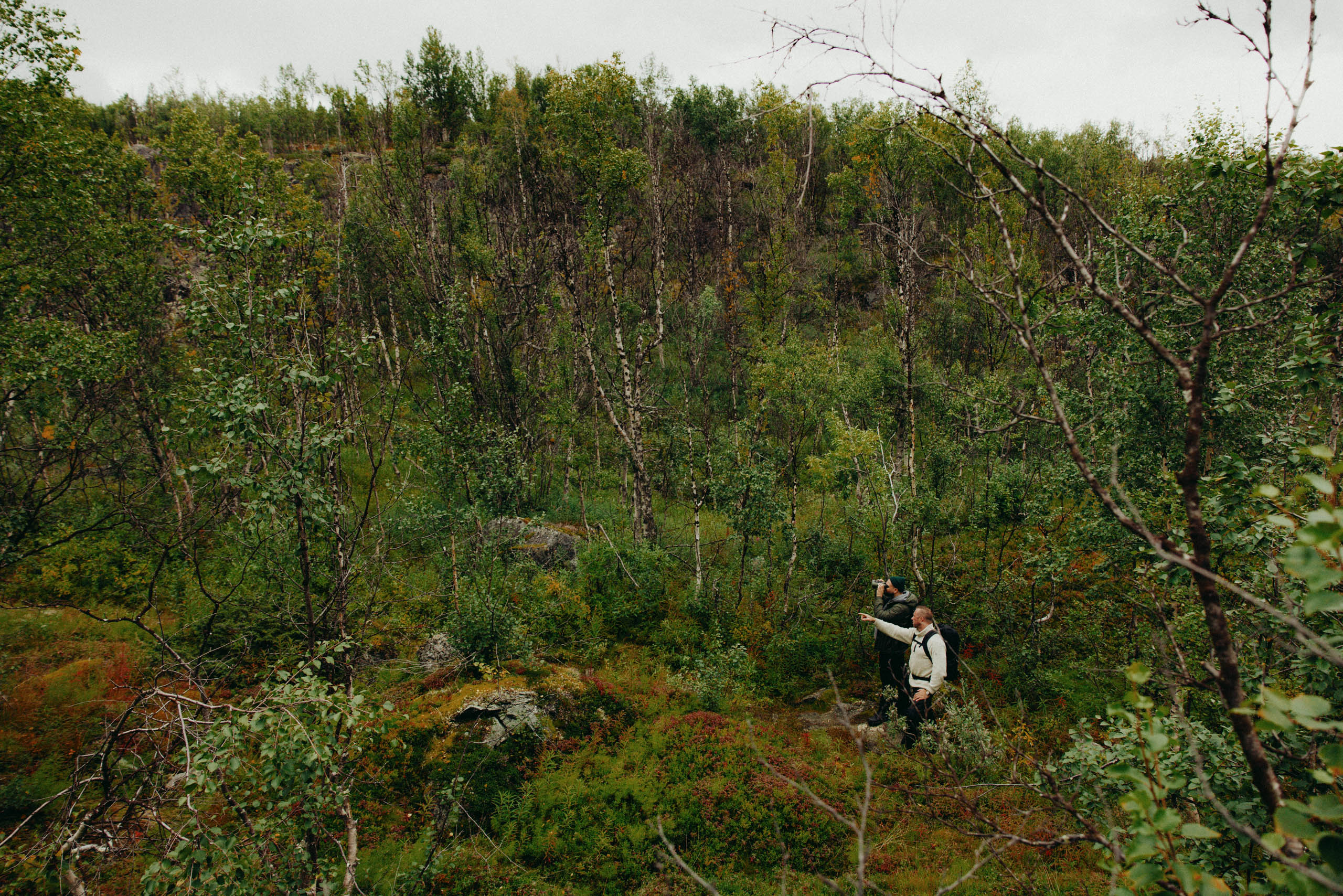
That’s especially handy when you’re searching for wildlife in unfamiliar territory or keeping watch over habitats where uneven terrain or other obstacles can get in the way. A broader view means a broader glance, and a broader glance means you’re more likely to catch movement — and locate an animal — and enjoy its beauty in detail.
Magnus Winbjörk doesn’t shy away from highlighting the benefits of Avilume XT50 Pro for scanning the landscape in thermal mode:
When everything is covered in snow, the landscape can be extremely bright. In those conditions, scanning the terrain with thermal binoculars can be much easier on your eyes than constantly looking through normal binoculars in that strong light.
Higher magnification: examine distant wildlife
Avilume XR50 stretches from 4× to 32× thermal magnification, built for long-range work — lakes, open fields, plains, mountainous terrain, anywhere the subject stays far off. It’s also useful with sensitive species, where keeping your distance means less disturbance.
The trade-off? A narrower 8.8° field of view, so you’ll scan more to track a moving subject or cover ground
Image stabilization
Higher magnification comes with a catch: even the smallest hand tremor gets amplified into a shaky mess. Avilume devices and Ventex XT50 fight back with electronic image stabilization, keeping the view somewhat steady whether you’re watching or recording handheld.
How Avilume and Ventex handle real wildlife observation conditions
Not everyone waits for clear skies to go wildlife watching. So the choice between Avilume and Ventex isn’t really about one spec winning out — it comes down to habitat, distance, time of day, and whether you need to actually see the animal, not just find it.
Observation scenario
Best fit
Why
General day-to-night birdwatching
Avilume
One device covers thermal localization, visible detail, and nighttime observation.
Forest and mixed terrain
Avilume XT50 Pro / Ventex wide-view models
Wide FOV helps scan and reacquire wildlife.
Open terrain and distant wildlife
Avilume XR50
Higher base magnification and distance-oriented positioning.
Dedicated nocturnal thermal surveys
Ventex
Focused thermal workflow without extra channels.
Existing premium optical binocular setup
Ventex
Adds thermal detection while existing optics cover visible identification.
Visible-color documentation
Avilume
Digital channel records color and visible features.
Thermal evidence of presence or behavior
Both
Both families record thermal images and video.
Long thermal-focused session
Avilume XR50 & Ventex XP35
Maximum runtime averages 10 h and 9 h
Avilume is built for day-to-night birdwatching, thanks to digital channels that let you observe in visible light and switch to night vision when the sun goes down. The XR50 targets distant wildlife in open terrain — water, plains — while the XT50 Pro trades some distance for a wider 17.5° field of view, better suited to scanning forests and mixed terrains.
Ventex sticks to what it does best: nocturnal thermal surveys, often paired with a separate optical setup for the rest. The XT50 shares that same 17.5° field of view for forest work, while the XP35 goes wider still at 17.8°, giving up resolution for portability and reach.
Both lines read thermal presence and behavior well. But only Avilume can flip to a digital channel and confirm a species by color — with Ventex, that job falls to whatever optics you’re carrying alongside it.
Ergonomics, battery life, and field handling
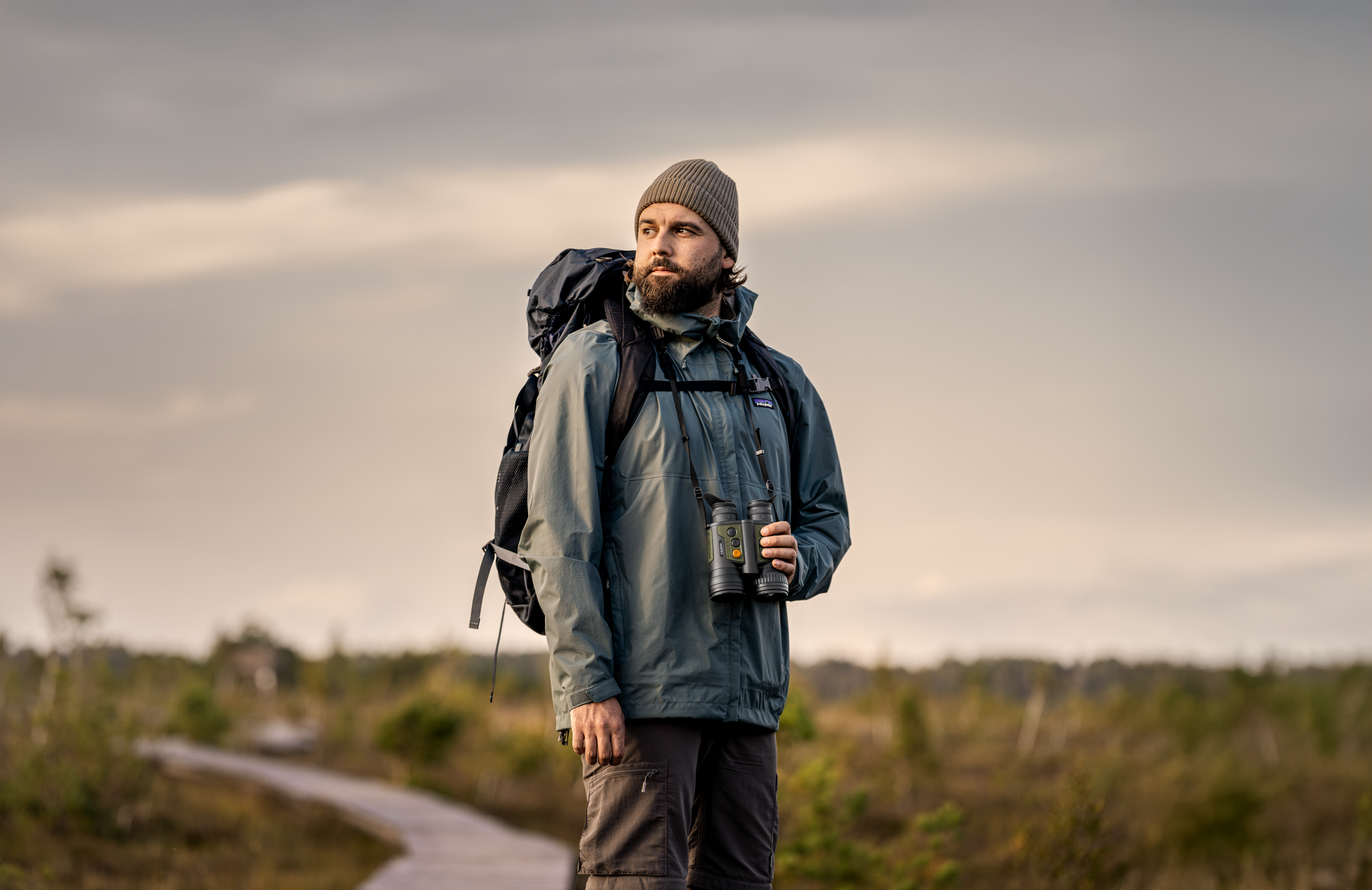
Both Ventex and Avilume stick to a classic binocular-style design for two-eye viewing. But how each model actually feels in your hands comes down to the details — weight, size, and battery life:
Weight: Avilume XT50 Pro and XR50 both weigh 1 kg with batteries in. Ventex is lighter — the XT50 comes in at 0.95 kg, and the XP35 drops to just 0.83 kg.
Dimensions: Both Avilume models measure 207 × 132 × 72 mm. Ventex XT50 is shorter but a bit wider at 197 × 140 × 72 mm, while the compact XP35 is the smallest of the bunch at 165 × 131 × 68 mm.
Battery life: Avilume XR50 leads the pack at around 10 hours, with the XT50 Pro close behind at around 8. The Ventex XP35 runs for around 9 hours, while the XT50 lasts around 6. Real-world runtime depends on conditions and which features you’re using.
Display: Avilume uses a MicroLED 1920 × 1080 AMOLED display for crisp, high-resolution images. Ventex keeps things smaller but still sharp with a 1024 × 768 AMOLED HD display.
IP rating: Avilume is IP67-rated — dust-tight and able to survive a dunk in up to 1 m of water for 30 minutes. Ventex is IPX7-rated, so it’s waterproof, though it carries no official dust rating.
Handling: Ventex offers an adjustable 63–74 mm interpupillary distance, along with 15 mm of eye relief, all wrapped in a reinforced magnesium alloy body built to shrug off knocks and drops. Avilume matches that adjustability with a 62.5–74 mm interpupillary distance and 13 mm of eye relief, housed in its own rugged magnesium alloy shell.
The comfort of the design and interface oozes with simplicity, further agreed by Magnus Winbjörk:
I find it very logical and intuitive to use. I’ve been sitting with it for about an hour now, jumping between the different functions and settings, and everything becomes familiar very quickly. It doesn’t take long before you can start operating it instinctively without having to think about what you’re doing.
Recording, apps, and observation documentation
Avilume: records thermal and digital photos and video with sound, storing everything in 64 GB of built-in memory. The Wild Vision app takes it further:
Smartphone streaming
Remote device control
Firmware updates
File viewing and downloads
Because it captures full-color digital footage alongside thermal, Avilume is the stronger pick whenever visible color matters for identification — plumage, markings, the details that tell one species from another.
Ventex: captures thermal photos and video with sound and connects to a smartphone for viewing and managing files. Its thermal clips are well suited for documenting presence, movement, and behavior in the field. The catch: no visible color means identifying species by markings may call for a second optical device alongside it.
Benefits and considerations
Avilume benefits
Avilume considerations
Thermal, digital, twilight, and night observation in one system
More features and channels to learn
4K digital detail and color support species examination
Digital identification still depends on distance, light, weather, and line of sight
Mixed thermal/digital Picture-in-Picture
May exceed the needs of thermal-only users
Digital and thermal recording with sound
Final price, size, and carry weight must be evaluated
Built-in IR, LRF, stabilization, and app support
Electronic binoculars remain battery-dependent
Ventex benefits
Ventex considerations
Focused thermal detection and observation
No visible-color digital channel
Works in darkness and difficult visibility
Species confirmation may require separate optics
Wide FOV across both current models
Thermal detail is not the same as plumage or coat color
Integrated LRF and thermal recording
XT50 is heavier and has a shorter than XP35
Natural companion to existing optical binoculars
Carrying two devices may increase total system weight and cost
Which model should you choose?
Choose Avilume XT50 Pro if…
You want one multispectral device for finding, examining, and recording wildlife without switching gear.
You regularly scan forests, woodland edges, wetlands, or mixed terrain.
A wide field of view and premium thermal resolution matter more to you than raw magnification.
Choose Avilume XR50 if…
You watch distant wildlife across open water, plains, or mountain terrain.
Higher thermal magnification and stronger sensitivity are your priority for picking out subjects at range.
You need the longest runtime in the Avilume family — though how long depends heavily on how you use it.
Choose Ventex XT50 if…
You want premium 1280 × 1024 thermal performance without a digital color channel in the mix.
Thermal detail, image stabilization, wide scanning, and a 1,500 m LRF are all on your checklist.
You already carry optical equipment for visible species identification.
Choose Ventex XP35 if…
You want a dedicated 640 × 480 thermal binocular with strong sensitivity and a wide field of view in a smaller, lighter body.
You’re happy to trade the XT50’s resolution for better portability and longer operation time.
A 1,000 m LRF covers everything you’re likely to encounter in the field.
Expert insights and field tests
Specs only tell part of the story. We asked professional nature and wildlife photographers who have used Avilume, Ventex, or both to share their field experience, good and bad.
BartVercruysse, known for capturing nocturnal images of birds around the world, acknowledges that the combined daytime and thermal channels in one device somewhat relax the workflow, making it more streamlined and faster:
The combination of thermal and digital channels makes this a great tool. I will no longer need the device plus binoculars to find Woodcock in daytime (I used thermal to find them, then binoculars to define exactly where they were, and then a camera with a big lens to photograph; now I will be able to do without the binos).
However, in the same statement to us, Bart highlights an area where Avilume XT50 Pro lags (literally) behind its thermal-only sister, Ventex:
When you bring the Ventex, which is hanging from its neck strap, to your eyes, the device switches on almost instantaneously. In the case of the Avilume, there is a rather long “wait” till the device switches on.
Despite this, in another wildlife photographer’s hands, Magnus, Avilume XT50 Pro seems to be a more comfortable option, due to how easy it is to control and how fast modes can be switched in between:
The way you switch between the different modes, the dual focus controls, and so on, everything feels spot on. And speaking of the zoom and focus controls, I really like how you can control basically everything from the central area of the unit without having to move your hand around.
Bartshares this feeling, comparing it directly to Ventex controls:
The access to the quick menu with a short push of the menu button and the use of the rotating wheel is much easier than pushing repeatedly the + or – button on Ventex.
However, Bart Vercruysse doesn’t shy away from giving praise to Ventex, comparing it to Avilume directly:
Ventex devices are great tools for both diurnal and nocturnal observation with good image quality. Avilume is in a different league due to its higher thermal image quality, the addition of a digital mode, and the improved layout for handling the device (in particular, the rotating wheel). I have already adopted it as an indispensable tool for my fieldwork.
Final thoughts: Is Avilume or ventex right for you?
Avilume is the strong choice when you want thermal detection, wildlife identification, nighttime observation, and documentation all in one device.
XT50 — best for wide multispectral scanning
XR50 — best for extra reach across open landscapes.
Ventex, on the other hand, is the stronger choice when thermal imaging is the central task, and you already own optical binoculars or a camera.
XT50 — premium HD thermal observation, the top-quality option in the line
XP35 — more sensitive, wide-view thermal setup.
However, the final decision comes down to what you prefer and want:
Choose Avilume if one-device versatility and visible identification support are the priorities.
Choose Ventex if dedicated thermal performance and integration with existing optical gear are the priorities.
Choose by the workflow you need in the field, not by the largest specification number.
FAQs
What is the main difference between Avilume and Ventex?
The main difference lies in the type of images each can capture. Avilume combines thermal imaging with a 4K digital channel and digital night vision, giving you a more complete workflow. Ventex, by contrast, focuses solely on thermal detection and doesn’t include night vision or another digital channel.
Is Avilume better than Ventex for birdwatching?
Avilume multispectral binoculars are more versatile for birdwatching. Their digital channel shows fine details like plumage and field marks, while its thermal channel helps you detect birds day or night — giving you both detection and identification in one device. Ventex devices are strong at detecting birds hidden between branches through heat signatures, but since it lacks a visible-light channel, it can’t show the details needed to identify the species.
Can thermal binoculars identify bird species?
No, thermal binoculars can only detect heat signatures, but they don’t show plumage, color, or other visual details needed for identification. With Ventex line devices, you have to carry an additional optical device (binoculars, monocular, etc.) for identification. Avilume binoculars combine thermal and digital channels together to create a detection and identification tool.
Can Avilume replace standard optical binoculars?
Yes, Avilume binoculars can replace standard optical binoculars in most field scenarios. Its digital channel captures visible-light and night-vision images, while its thermal channel detects heat signatures to make tracking and scanning for wildlife easier. It’s a single device that replaces the need for multiple.
Which model is best for forest observation?
Avilume XT50 Pro and Ventex wide-angle binoculars are the best choices for forest observation. Their wider field of view lets you see more of the scene without sacrificing image quality, making it easier to scan the treeline and spot movement between trees.
Which model is best for long-range wildlife observation?
Avilume XR50 is the best option for long-range viewing. Its 4-32x thermal magnification and narrower 8.8° field of view work together to let you see further with a more focused, detailed view.
Can Avilume and Ventex be used during the day?
Yes, Avilume and Ventex binoculars can be used during the day, since thermal detection works regardless of lighting. Avilume offers more during daytime use, though, because its digital channel adds color imaging on top of thermal detection. Ventex, by contrast, only shows heat contrast during the day, which is enough for detection but not for identification.
Do thermal binoculars see through foliage?
No, thermal binoculars can’t see through foliage or any solid object. What they can do is pick up exposed warm body parts through small gaps, or make an animal stand out against cooler surroundings.
Which family is better for recording wildlife?
Avilume family is the more versatile option for recording, as it can capture both thermal and digital footage. This means you can record daytime color video, night-vision footage, and thermal imagery all from one device. Ventex binoculars, dedicated thermal devices, can only record thermal footage — you’d need a separate camera to capture standard video alongside it.
Which model has the best battery life?
Avilume XR50 leads with up to 10 hours, followed by Ventex XP35 at 9 hours, Avilume XT50 Pro at 8 hours, and Ventex XT50 at 6 hours. Actual battery life will vary depending on which features are in use and the surrounding temperature.
About the experts
Expert Contributor:
Magnus Winbjörk
Magnus Winbjörk is a Swedish nature photographer and photography tour guide based in Tjautjas, in Norrbotten, in Sweden’s far north. Working in the region’s remote wilderness, he uses thermal imaging to locate wildlife in the dark and across vast, open terrain, and leads photography tours sharing that landscape and its animals with others.
Expert Contributor:
Bart Vercruysse
Bart Vercruysse is an independent Belgian nature photographer specializing in nocturnal seabird photography. Since discovering the nighttime activity of Cory’s Shearwaters on Pico in 2012, he has pursued “Petrels by Night” — a project to photograph Western Palearctic petrels, storm petrels, and shearwaters in flight at their colonies after dark, working entirely in infrared since 2018 to avoid disturbing the birds.
Unlock the world of thermal observation with Pulsar Wildlife
Get expert insights, product updates, and tips on using thermal tech for nature exploration.